
What do digital cameras, camcorders, smartphones, 3D printers, and game consoles have in common? Memory cards! Many of our electronic devices either require or support at least one form of memory card.
With dozens of options on the market in various speeds, capacities, and formats, it’s easy to get overwhelmed and confused if you don’t know what you’re looking for. This handy memory card buying guide will give you all the tools you need to help you make the right choice.
Types of Memory Cards
There are many different formats on the market, but the most common types found in consumer electronics are SD cards, Micro SD cards, Compact Flash, and Compact Flash Express (CF Express) cards. The type of card you’re looking for depends entirely on the device you’ll use it with.
SD Cards
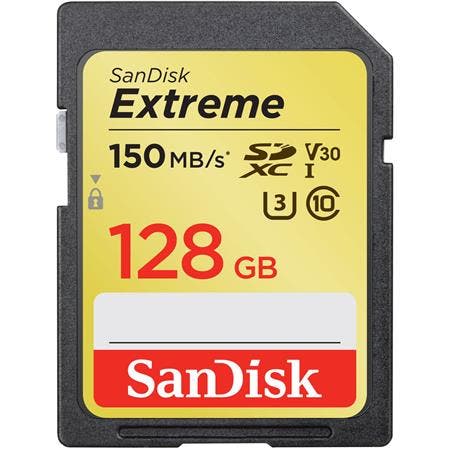
SD cards are often found in entry and mid-tier DSLR cameras and digital camcorders. They are available in various capacities with varying transfer speeds. Consult your device’s manual to determine the maximum capacity SD card that it can support. Secure Digital High Capacity (SDHC) cards can support up to 32GB of storage, while Secure Digital Extended Capacity (SDXC) cards top out at 2TB.
The Class of Card Denotes the Maximum Transfer Speed
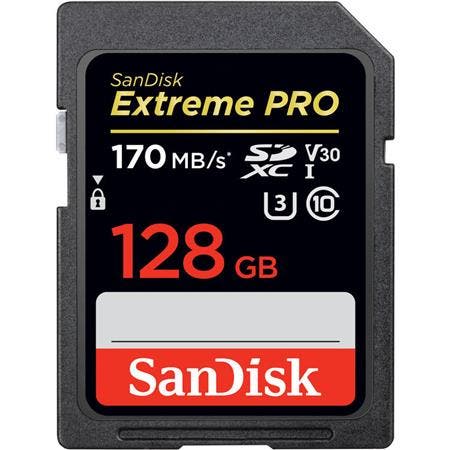
Officially, Ultra High Speed (UHS) Class 1 cards can support read and write speeds of up to 104MB/s. In reality, UHS-1 cards can transfer data much faster than their specification allows. The following SDXC cards all support read speeds up towards of 120MB/s:
- SanDisk 128GB Extreme PRO UHS-I U3 SDXC Memory Card
- SanDisk 128GB Extreme UHS-I V30 U3 Class 10 SDXC Memory Card
- Lexar SILVER Series Professional 1066x 128GB SDXC UHS-I Memory Card
UHS-1 cards can have write speeds as slow as 30MB/s.
Fastest SD Cards
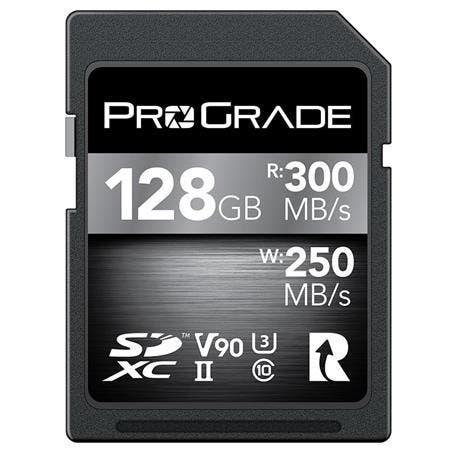
Theoretically, UHS-II cards can reach 312MB/s. Realistically, these cards are often suitable for read speeds up to 300MB/s and write speeds above 250MB/s. The SanDisk 64GB Extreme PRO UHS-II Memory Card is a good option if you’re looking for a fast drive and not a ton of storage space. The Lexar Professional 1667x 128GB SDXC UHS-II/U3 Memory Card and Prograde Digital 128GB SDXC UHS-II U3 Class 10 V90 Cobalt Memory Card are excellent choices for videographers who need the extra capacity for all their video recordings.
Micro SD Cards
Micro SD cards are compact versions of the standard Secure Digital card. These tiny storage chips can hold as much data as a standard SD card (up to 2TB) but in a much smaller package. They come in SDHC and SDXC capacities and UHS-I and UHS-II speed classifications.
Micro SD cards are often used in smartphones and tablets to expand their storage capacity.
If you’re looking for a reliable Micro SD card, these are both excellent options:
- SanDisk 128GB Ultra UHS-I Class 10 A1 microSDXC Memory Card
- Lexar SILVER Series Professional 1066x 128GB microSDXC UHS-I Memory Card with SD Adapter
Compact Flash Cards
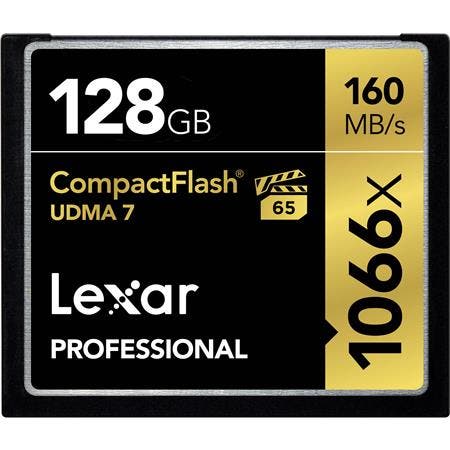
Traditional CompactFlash memory cards support transfer speeds up to 150MB/s, which is plenty for shooting high-resolution photographs and video up to 4K. These cards are most often used in high-end DSLR cameras from Nikon and Canon, but they have been phasing CF cards out for a while.
The Lexar 128GB Professional 1066x CompactFlash Memory Card is one of the fastest traditional CF cards available. Adorama customers report that even old cameras operate faster with this card.
CFast Cards
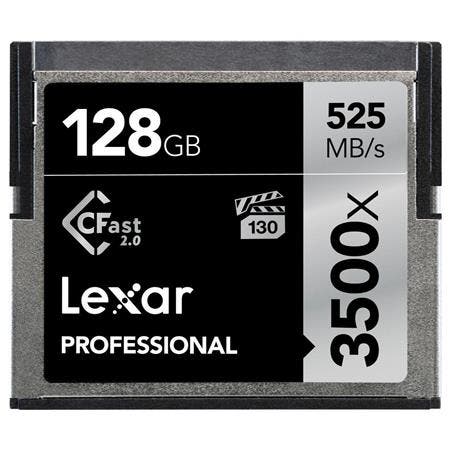
If your camera supports CFast cards, you’ll find that they’re much faster versions of Compact Flash storage cards. They use a faster data transfer interface called SATA 3.0, which quadruples the maximum transfer speed to 600MB/s. The Lexar 128GB Professional 3500x CFast 2.0 Memory Card is one of our top recommendations for a CFast card.
CFexpress Cards
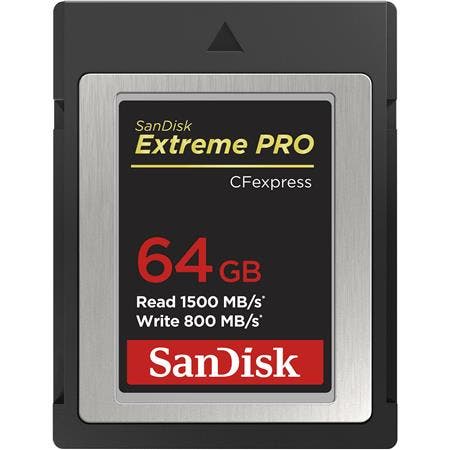
CFexpress evolved from Compact Flash. These cards are smaller than traditional CF cards, and they use PCIe 3.0 for data transfer and the NVMe solid-state drive specification. Type-A CFexpress drives can move data much faster than CFast cards. The Prograde Digital 160GB CFexpress 2.0 Type-A Memory Card is rated for 800MB/s reads and 700MB/s writes.
Type-B CFexpress cars are quite a bit faster than Type-A cards. You can expect as high as 1200MB/s write speeds and 1750MB/s read speeds from the fastest CFexpress cards. If you need a fast CFexpress card, consider these top options: