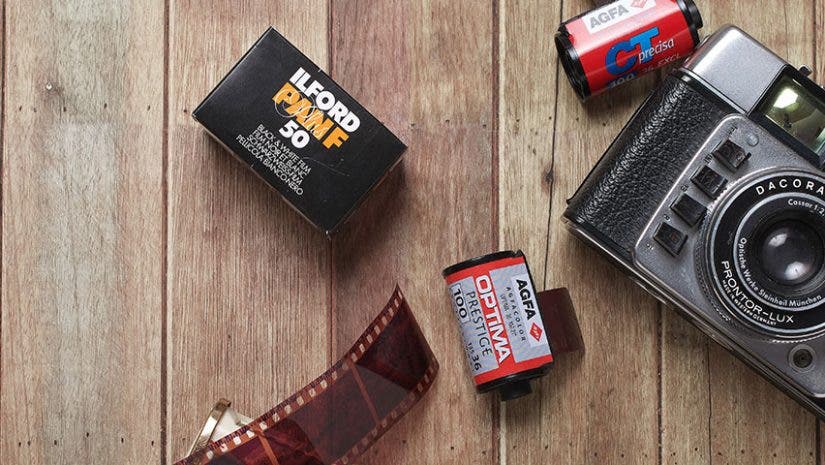
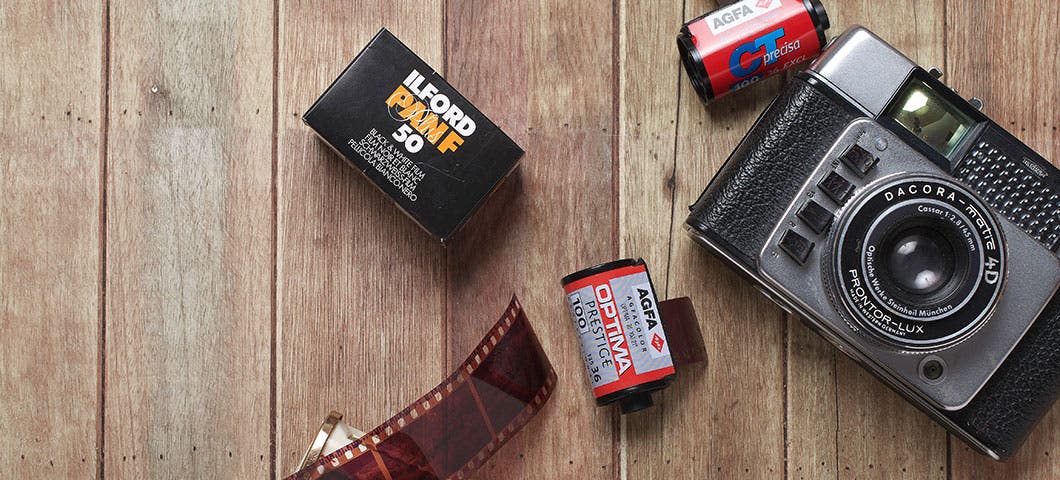
Even with the latest and greatest updates in DSLR and mirrorless cameras, film photography is still having a resurgence. Some of my photographer friends still shoot entire weddings in film, and others dabble in it for the fun. But however it’s being used, it seems that more and more people are finding film photography fulfilling. Having used film and owning a few beautiful old cameras, I can explain some of the attractions of film photography:
Tactility: There’s a certain enjoyment in using a finely crafted machine. It’s why people pay thousands of dollars for mechanical watches, and it’s why, when I hold an old TLR in my hands, I feel a certain sense of respect and awe for an object older than me that still works well.
Speed: There’s isn’t any. Film photography is slow — no notifications popping up on your screen, no ability to spray’n’pray, no distractions. You need to focus (pardon the pun) on your photo, and nothing else, because if you don’t get it right in the camera, you don’t get the shot.
Fun: You never know what you’ll get until you are long past taking the shot. That means that when you take the photo it might be some weeks (or, if you’re doing the developing yourself, at least some hours) before you know what your shot looks like.
But film photography has challenges too. For me, when I got started in photography, the biggest was the cost. Buying and developing film is expensive. It’s frustrating, sometimes, to send an entire roll to be developed and find out that there was something wrong with the camera and the entire roll is garbage. And some people just don’t have the time and patience to deal with film photography.
But notwithstanding the drawbacks, there are definite advantages to film, and I encourage you to give it a try. Here are three ways you can get involved: As a dabbler, a diver, or drastically.
Dabbling: The barrier to entry, as a dabbler, is not very high. All you need is a film camera, some film, and a place to develop the film. There are still plenty of places to find film cameras online, including my favorite, Adorama’s used department, but you can also check other online retailers and your local flea market. Garage sales are also good places to look. Developing is slightly more complicated — gone are the days when every drugstore would develop your film for you, but it’s still not hard to find film developing services in your area who will either mail you prints, or better yet, email you high quality scans.
When it comes to cameras, be aware that there are lots of choices. You can certainly go with the classic 35mm format, but know that if you’d like to pick a different format another advantage of film photography is that starting with film in unconventional formats is much less expensive than using the corresponding digital equivalent. Learn about the most common film camera formats to find out the one that’s best for you.
Diving: Jump right in. Buy a camera, but also set up your own darkroom, and develop your own shots. It is incredibly satisfying to develop your own prints. Contrary to many people’s assumptions, there’s also a lot of retouching you can do in the darkroom. (In fact, many of Photoshop’s tools, and their names, originated from darkroom techniques.) You can make beautiful black and white prints without spending an incredible amount of money or time learning technique. (Color prints are more complicated, but definitely doable — give them a try!)
As far as developing chemicals are concerned, you may not have an easy time finding them in your neighborhood, but you can get all the chemicals — as well as everything you need to set up your darkroom — online. Check out our guide on how to develop film for all the must-know tips.
Drastic: You live life on the edge. You’re not going to get a thrill from developing 35mm film prints — you do everything to the max! I’ve got just the thing for you – have you ever considered large format view cameras? How about lomography? Buying an old Holga and trying to make it make some beauty? Pinhole cameras are all the rage now (just kidding!) — easy to make, but you might need a two-hour exposure to take your shot. Daguerreotyping can make a unique silvery print on glass.
The bottom line is that staring with film photography, even in addition to your regular digital photography, opens up new, fun ways to make the world a brighter place and you a happier photographer. Get out there and go make some magic!
Photo by Immo Wegmann on Unsplash