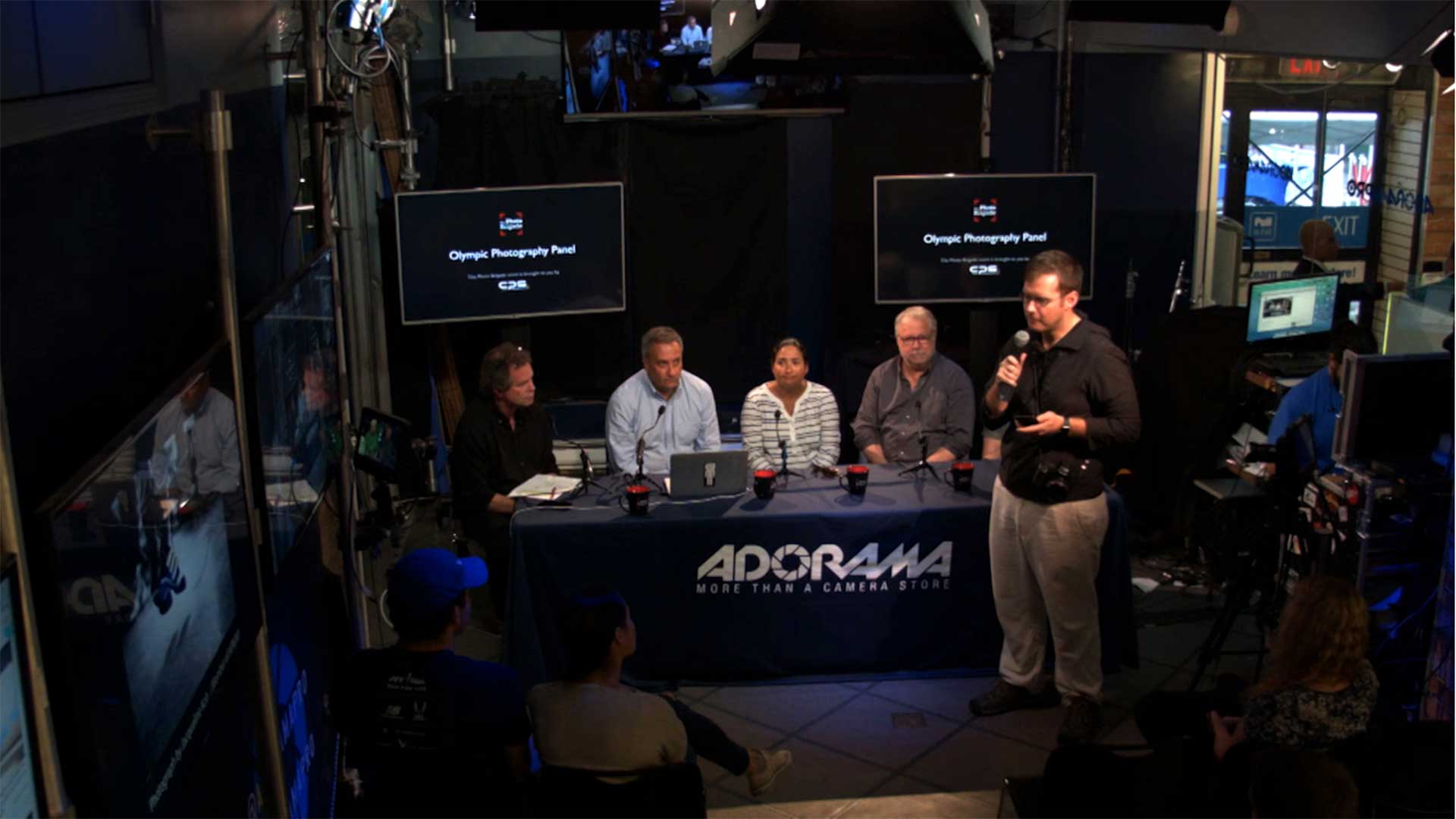
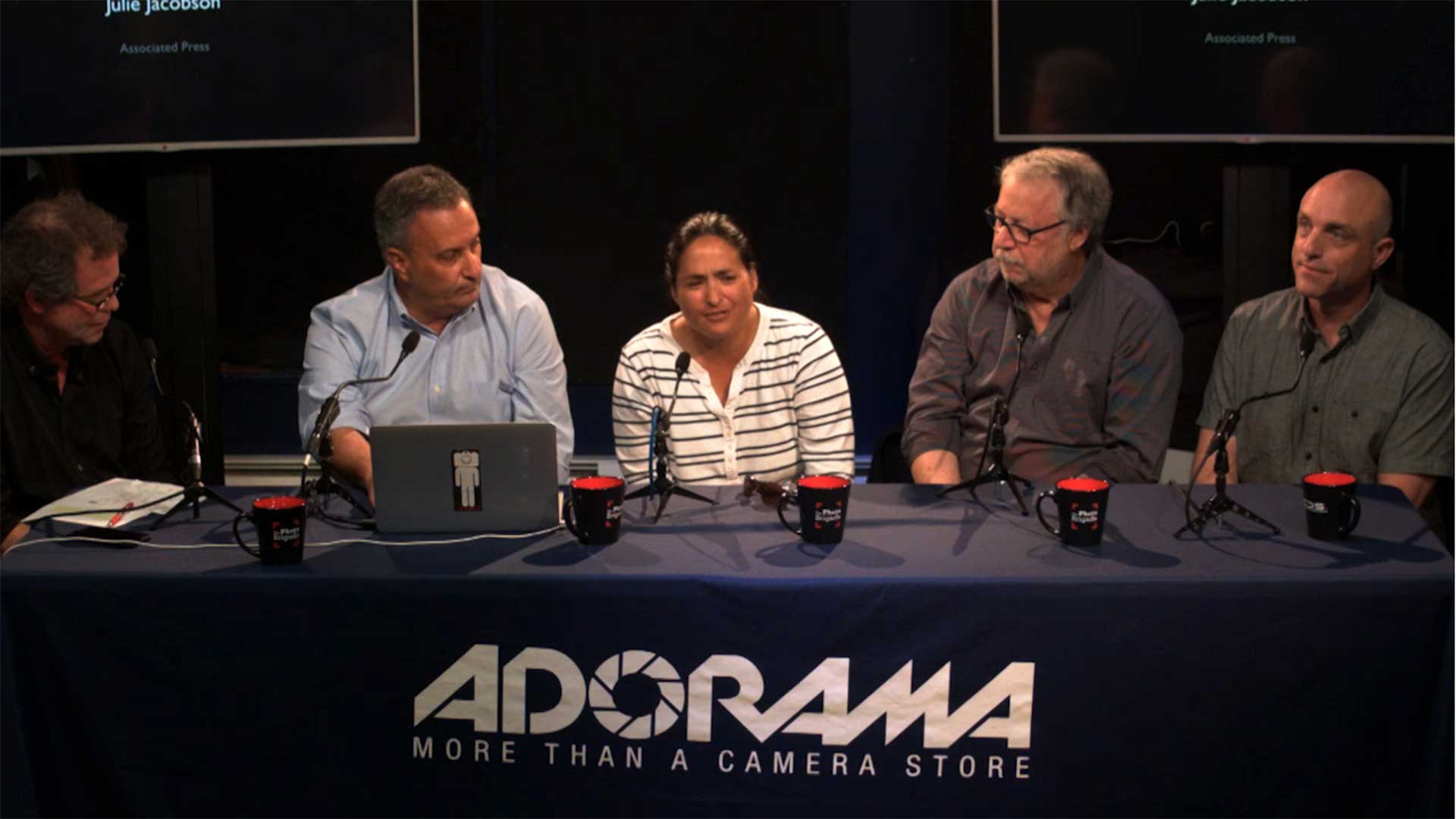
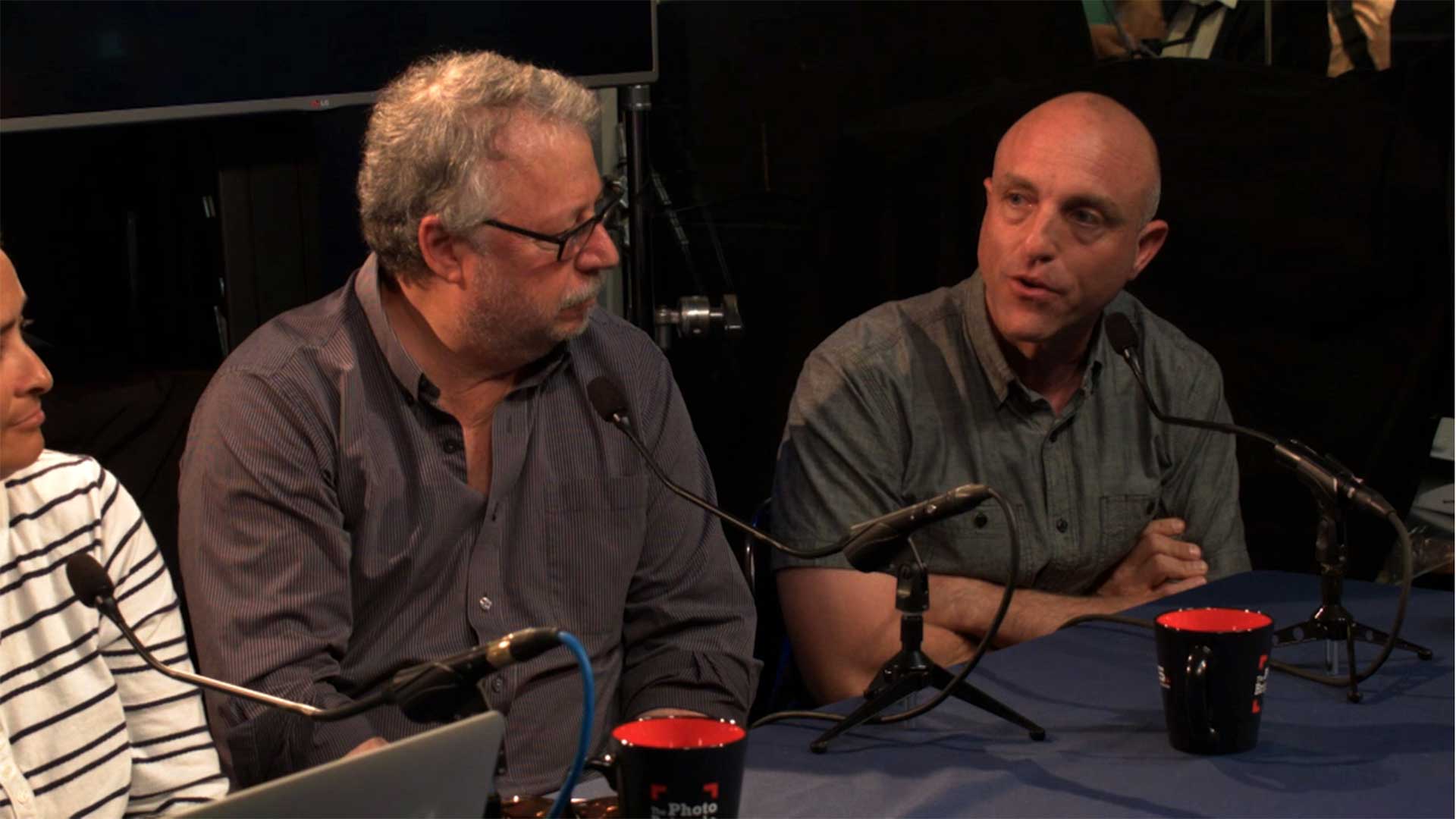
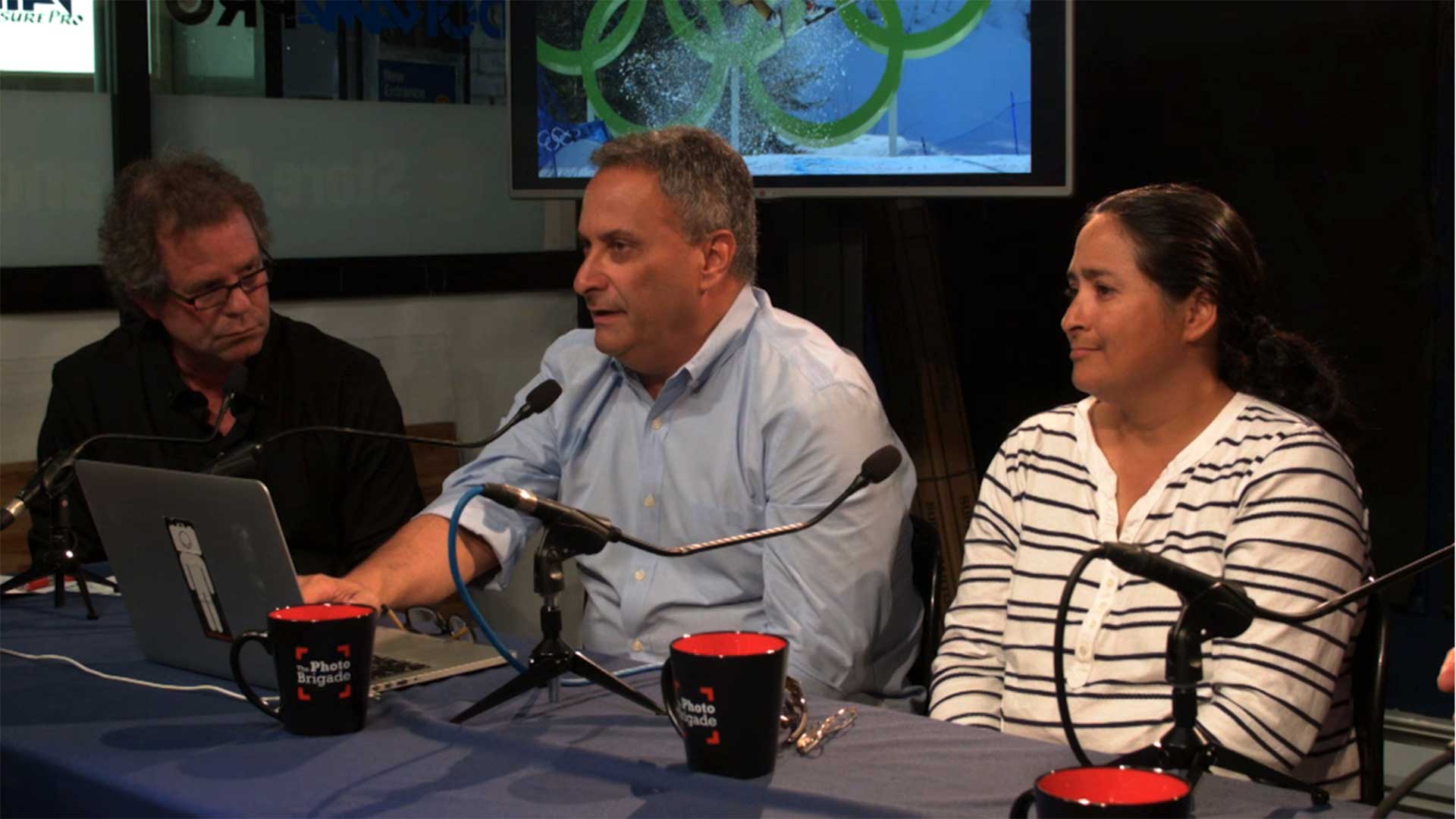
Recently, Adorama hosted yet another panel discussion presented by the photo industry blog, the Photo Brigade. Moderated by Flipboard editor and former Sports Illustrated photographer Steve Fine, the guests consisted of professionals who have made their mark covering the Summer and Winter Olympics. Sharing their thoughts and experiences in front of a very attentive audience were:
- Gary Hershorn
Formerly Reuters, now freelancer for Getty.
- Al Bello
Currently freelancing for Getty.
- Robert Deutsch
USA Today
- Julie Jacobson
The Associated Press
Steve started the conversation with a very timely question. Had any of the panelists ever captured the recently departed Mohammad Ali during his professional glory? Most of the photographers said “no” as most of them started their careers shortly after Ali retired from boxing. However, both Robert Deutsch and Al Bello were present when Ali lit the Olympic torch in Atlanta during the ’96 summer games. And Gary Hershorn managed to take a shot of the championship boxer sitting in the audience as he watched his daughter Layla fight. However, Al did add that while watching the great “Thrilla’ of Manila” fight on TV with his dad, it became a somewhat inspirational moment that aided in his developing interest in sports.
The panelists then recounted how long they’ve been covering the Olympics, and for which outlets. The moderator himself confessed that he has covered fourteen Olympics and likens the experience to being at “seventeen Superbowls in a row. What happens each day cannot be replicated. It’s like a marathon but inside each marathon is like a mini-sprint.” Steve then added, “we cover the games to record history but also to make iconic images.” And then he asked the panelists to describe their favorite moments as well.
Al: he has been attending the Olympics with Getty AllSport since 1993. And soon he will be entering his eleventh Olympics as a professional photographer. His favorite moment? Covering Michael Phelps in Beijing, “watching Michael Phelps destroy everyone was incredible!”
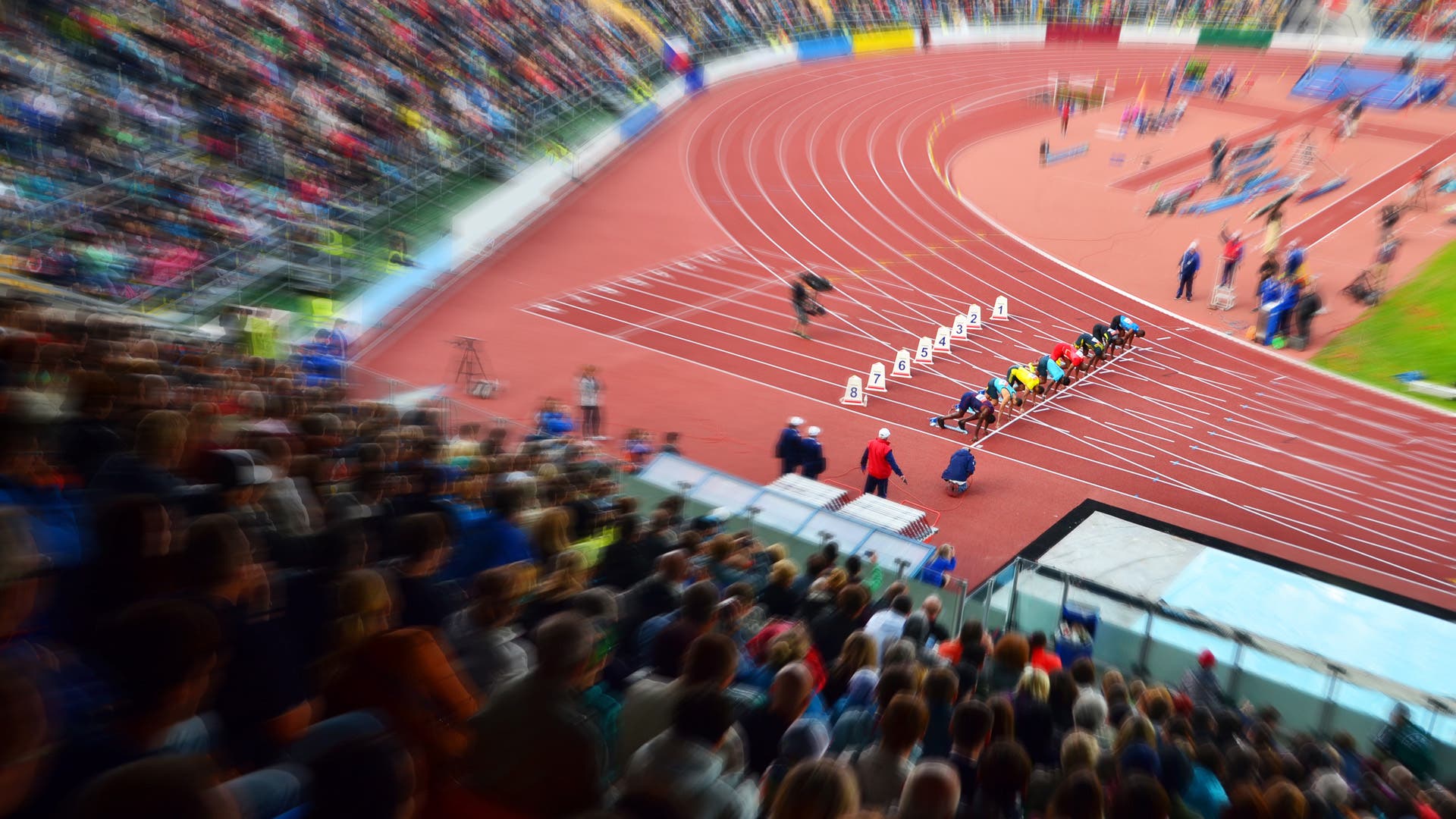
Robert: he has been with USA Today for thirty-three years and will be covering his sixteenth Olympics. His favorite moment was capturing Jamaican track and field athlete Usain Bolt in London, 2012.
Julie: she has worked with the AP since 2001 and is now approaching her eighth Olympics. And her favorite moment was capturing a record-breaking pole vault jump from up in the catwalk in Athens.
Gary will be covering his seventeenth Olympics and watching Ben Johnson winning the ’88 Olympics was his favorite moment. This was particularly thrilling for Gary as he had been following Johnson throughout that year.
The next line of questioning represented a common theme that permeated throughout the rest of the discussion. And this involved the effort that goes into preparing for the games.
Julie Jacobson: “At the AP, they tell you in advance what you will be shooting. The last two Summer games I did gymnastics.” The first thing Julie will ask is whether there will be a catwalk in the arena and whether she can set up remotes from there. Also, a lot of research goes into who is returning, who is on the public’s radar and their history, background, etc. “You can make all the pretty pictures in world,” Julie continued, “but if it’s not of the athlete of that moment, it’s not going to be that much of a picture.”
Everyone pretty much agreed that establishing access, meeting with venue coordinators and other connected personnel will increase your chances of getting the optimum shot. When asked how much he can focus on creating pretty pictures, Robert stated, “not enough art. Too much news. You gotta’ get everybody.” Al seemed to offer a different sentiment but first revealed that he preps about four years before the next game. “If I know that Tokyo is next, I think about what the ceiling is going to be at the pool in Tokyo.” His heart, however, is in the creative picture. “It’s a constant struggle for me,” he says. “Because I know what is the most important moment but I can see where the best creative moment is going to be.” But he affirmed that there was a time when you could get away with that more than you can now due to how things are structured differently. Whereas Gary has seen this from many different perspectives considering he has worked as a shooter, editor and team runner. “Life is about the moment. Going way back we never thought about the Olympics as an art. It was news driven.” For him, it was always about getting to know the athletes. As of now, he feels his role is to supply game notes. He would come up with a cheat sheet of competitors most likely to win a medal. Maybe it wouldn’t always work out the way he predicted but at least five elite competitors had a good chance of coming out on top.
Steve then offered his own observation, “There are three important factors to consider when covering an event like this: you gotta’ capture the magic moment, get a sense of place and need to get tears and cheers.” He pointed to Julie as an example of a photographer who seeks to achieve that interesting image from a unique vantage point. But the wire services are big on the strong reaction.
Al: “It can’t just be about what that athlete is going through or whether he’s standing in front of the rings. More thought has to go into it. It’s also about how the light hits this particular athlete, etc.” He pointed to photographer Heinz Kluetmeier as an inspiration. “I was so enamored with what he did in Barcelona and his bravado. And he just put his camera into a pool.” It’s that outside-of-the-box approach Al aspires to. To which Steve responded with his rule to stand by, the “Six Ps.” He elaborated, “Proper Preparation Prevents Piss Poor Performance.” Al also added, “please and thank you goes a long way. Be polite. Be considerate.”
In terms of being in a position to capture that “magic moment,” it might depend on the nature of the event one was assigned to cover and whether that would involve being inside or outside. Robert confessed that most of the time he has photographed indoor events as has Al. Current freelancer Gary Hershorn has never been concerned with capturing that sense of place. For him it was always about having the right gear, the longest possible lens and that “peak moment” you are waiting for. Lately, he has been more interested in establishing place as a means of recoding history within an image. He cited the example of capturing time on a clock just as a basketball hits the net near the end of a game. Another factor to consider when you’re approaching your subject is whether you are photographing for a monthly, weekly or daily. According to Steve, “weekly mags and daily newspapers might take a different approach than monthlies.” But Julie has her own belief that might simplify the process a bit. “You’re not always able to get up close to a person’s face so I focus on the body language.” She says, “like getting that athlete all by himself among a sea of empty hurdles. Someone could break a world record in a preliminary heat… always keep your guard up, always look for that shot no matter what the event.”
The rest of the panelists agreed with Julie’s sentiments. Al offered, “reaction happens in front of you all the time. You can’t avoid it.” And everyone pressed the importance of going to preliminaries, rehearsals, and practices. This allows multiple opportunities to anticipate when a swimmer may appear out of the water or when another athlete may throw his or her javelin. Al affirmed, “If you don’t watch the practice you’re behind the Eight Ball for sure.
But what about those moments taking you out of your comfort zone? Where, after spending a lifetime covering field and track, you suddenly find yourself assigned to, say, an archery event? Or you’re suddenly dropped into an unfamiliar venue?
Julie Jacobson: “You’re always looking up the rules of the sport (to see) how it’s done.” She explained how she had to study up on curling, watched everything she could. Even questioned “the guy who would make the ice.” By the end of that Olympics, she had become an expert on curling. Gary noted that a lot of the more obscure events are covered more so now than they were back in the day because the Internet and modern day media has made it possible to cover everything. He brought up an interesting anecdote regarding the Pan American games he attended last year. It was his first time photographing something that wasn’t involved in just track and swimming. “I never realized how hard it was to photograph volleyball!”
Robert then offered, “In theory, you’ll have people there who know everything there is to that sport. And then you have people who show up and have no clue. And sometimes they take the more impressive shot.” As an example, Robert tells a story about when he was photographing a pole vault jumping event. He was waiting for that perfect shot until, “another guy from Chicago just comes up there. He’s yakking away, kind of distracting me and making me nervous. Suddenly he picks up his camera and takes a shot of the pole vaulter breaking his pole in half, then puts down the camera and continues talking to me. And I’m standing there having not shot a frame of it.”
Steve questioned whether the efforts involved to report on the Olympics has changed all that much. Gary responded with a simple answer, “the difference is technology. We shot with film. Now we’re working with wired networks. Everyone is connected to an ethernet cable.” Robert agreed, “we once dragged a Japanese cell phone up on a mountain for the downhill ski race. And we were able to drag an editor with a laptop up there. And we beat everybody by 24 hours.” Al remembered, “one roll of film used to be twenty-four exposures. You had to make it count. Now you shoot four billion frames and you can shoot a movie so obviously, you’re going to get something.” Gary continued, “you can have a person sitting literally anywhere in the world in an office controlling the camera with a joystick somewhere.” Not only that, now you have to be an IT technician, a network technician as well as a photographer, which has added a new layer of stress to the role.
The panelists then went on to a different track, this time lamenting the shots they missed, those great, iconic moments that got away.
Al recalled the time he was attempting a slow shutter shot of Mike Powell (who broke the high jump record in 1996). Suddenly, Powell dived into the ground right in front of him and Al didn’t have time to adjust his settings. That moment has haunted him ever since. Well, that is up until the 2008 games where he was able to capture a similar image with a different athlete. Robert on the other hand also attempted an “artsy” shot of an all female leg race. It was at that moment the athlete Suzy Hamilton fell right in front of him. “What are the odds,” Robert exclaimed. “Then Suzy Hamilton falls right in front of you – crash and burn – and I’m shooting at a fifteenth of a second!”
Julie had a slightly more distressing tale to tell. “Vancouver Olympics. Three games of hockey a day. It’s the gold medal game.” She continues, “I’m up in the overhead position. To my right is the TV camera area. There was a guy standing up there eating his French fries. He wasn’t bugging anybody so I didn’t say anything. The game was tied… So I’m following the action, Sidney Crosby gets the puck and, you know, he’s going for the goal. I’m on him and on him and all of a sudden the guy standing there eating his French fries throws up his arms to cheer and he bashes this arm,” Julie waves her left arm, “right into my camera lens and bashed it against my face! So I missed that winning shot.”
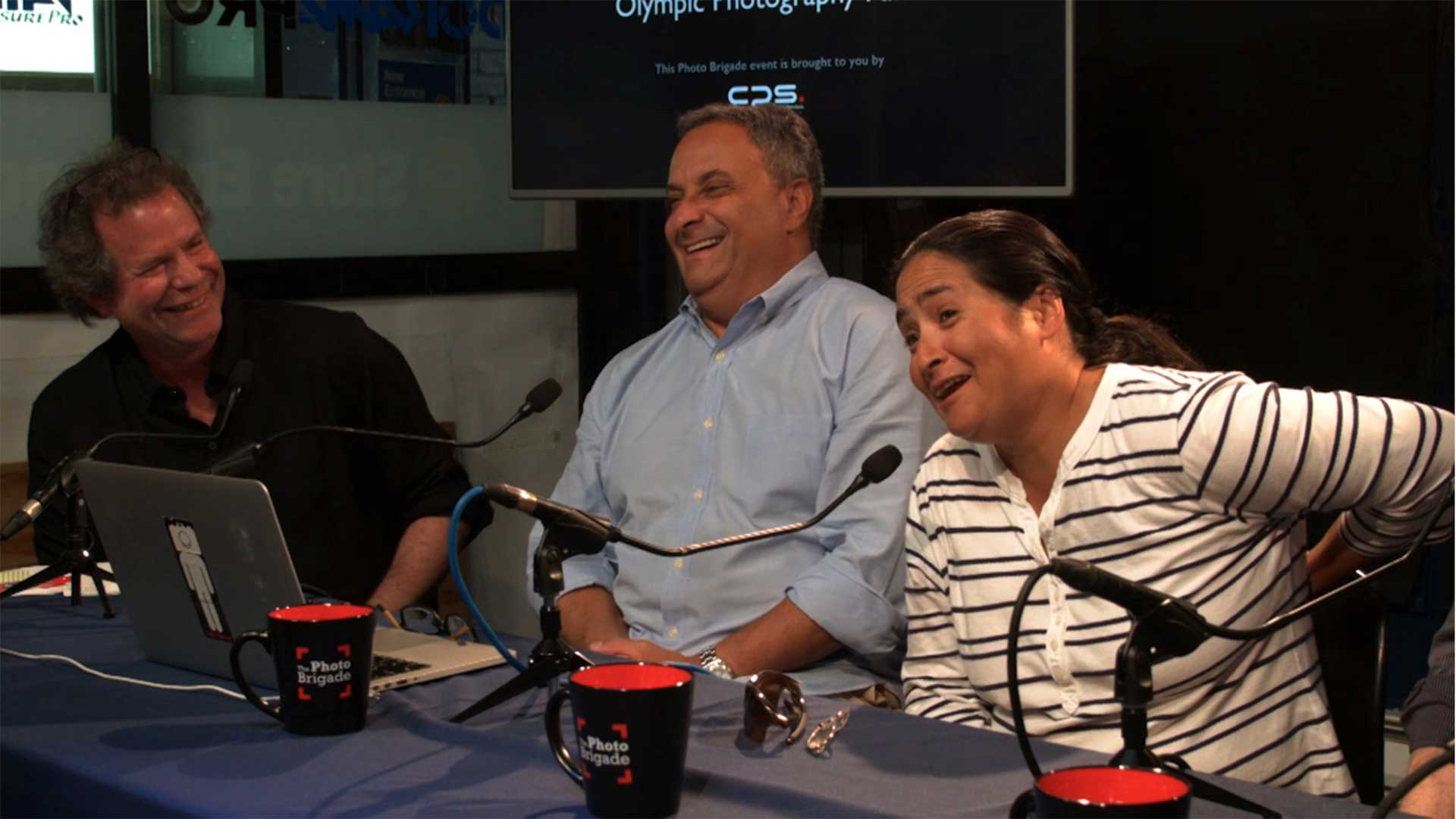
Gary, on the other hand, cited not one, but two big fails. “Michael Johnson winning the 200 meters. Record time. And my camera was out of focus. I botched it from start to finish.” Gary then mentioned another mishap where he was focused on the wrong athlete. That the athlete he was convinced wouldn’t win… did.
Eventually, the floor was opened up for further questions. The one that seemed to resonate the most was “how do you get your start in sports photography?” The panelist seemed to be all on the same page with this. Simply, start small. Cover small sporting events, little league, game players in parks and so on. Then build from there. But they each did offer this sobering thought: there’s less money out there for mainstream publications to pay and almost none with online media. Closing out, moderator Steve Fine had this to say:
“On staff photographers have dwindled. With that, what has disappeared is this sense of teamwork. Eleven photographers would work together, on staff, to the point where the competition was inside the camera and not with whoever was standing next to you. I fear that going forward, only wire services will be providing the images and there will be fewer on staff photographers.”